
Ethos Clinicians Help Pioneer Vision-Restoring Surgery for a Rare Wolverine
December 10, 2025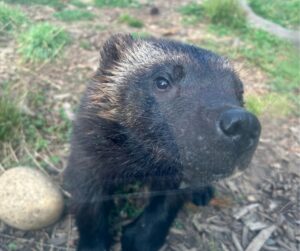
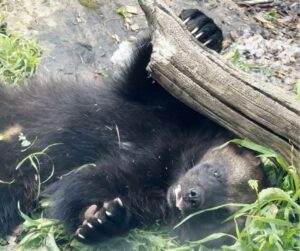
At San Francisco Zoo & Gardens, a global medical milestone has been achieved. A two-year-old wolverine named Edward is believed to be the first in the world to receive a custom-made intraocular lens. What began as early cataracts in both eyes became a case that pushed the boundaries of veterinary medicine and highlighted Ethos’ vision to revolutionize veterinary care through innovation and collaboration.
When cloudy vision appeared in Edward’s right eye, zoo veterinarian Dr. Nick Dannemiller consulted Dr. Kate Freeman, a board-certified veterinary ophthalmologist at Veterinary Vision, an Ethos Veterinary Health hospital known for advanced ophthalmic care and extensive work with exotic species. Dr. Freeman diagnosed a mature cataract in the right eye and a developing cataract in the left, an unusual finding in such a young animal and significant for a threatened species with only about 30 individuals in North American zoos.
Dr. Freeman removed the cataract from Edward’s right eye in August. However, without a species-specific implant, the surgery left him farsighted.
“In a cataract surgery, the contents of the lens that normally refract light to the retina are removed because they have become clouded, obscuring vision,” explained Dr. Freeman. “In humans, and even in cats and dogs, there are manufactured replacement lenses made specifically for those species. At the time of Edward’s first surgery, there were no artificial lenses made for a wolverine.”
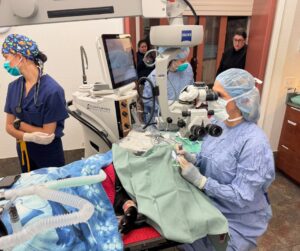
Dr. Freeman set out to engineer a solution never before achieved in a wolverine. She collaborated with UC Davis professor emeritus Dr. Christopher Murphy and Ohio State University College of Optometry professor Dr. Donald Mutti, experts whose prior joint work included intraocular calculations for birds. Using advanced ultrasound, corneal measurements, and specialized modeling, the team developed a one-of-a-kind 100-diopter lens designed specifically for Edward.
In November, Dr. Freeman successfully implanted the custom lens during a second cataract surgery. Post-operatively, Edward demonstrated noticeable improvements, including confident presentation during training sessions and sharper visual tracking. His care team also observed natural behaviors, such as out-hunting his exhibit companion, that indicate meaningful restoration of functional vision. Today, he voluntarily cooperates for daily eye drops, and his progress continues to be closely monitored.
For a threatened species whose long-term survival depends on excellent health under human care, restoring vision is more than a medical achievement. It is meaningful conservation.
At Ethos, clinicians routinely practice where established protocols do not yet exist. They push the boundaries of what is medically possible through continuous improvement, collaboration, and a commitment to inspiring hope through unparalleled care.
Edward’s story shows how Ethos clinicians deliver world-class medicine to patients who depend on advanced approaches for their future. For veterinarians and specialists who want to push medicine forward, this reflects the purpose-driven work across Ethos, expanding capability and shaping the next era of veterinary care.